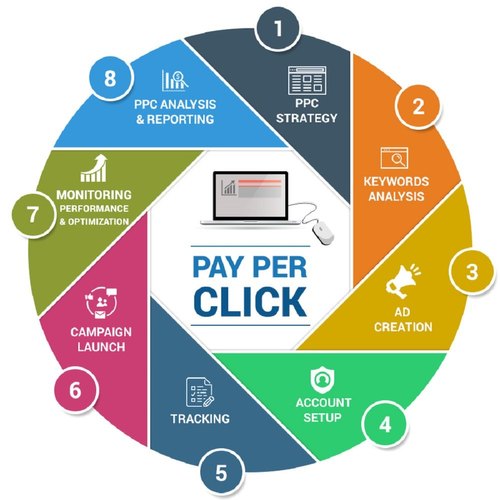
Pay-per-click (PPC) advertising is extremely competitive. For success it is essential to develop an organized plan to execute it in a disciplined manner. The landscape is constantly changing because of algorithm updates to platforms and changes in user behaviour and the increase in competition. The most successful PPC companies stand out by moving beyond basic campaign management and incorporating a core set of qualities into their operational DNA. These characteristics allow them to consistently outperform the competition, provide better ROI to their clients and develop long-lasting, results-driven campaigns. These ten qualities represent the fundamental pillars upon which top-tier marketing agencies rely on to turn advertising investment into tangible business expansion.
1. Data-driven Decision Making: A Goal that is unwavering.
PPC companies that succeed are not based on gut instincts or hunches. They base their entire strategy on a rigorous and data-driven framework. They go beyond the simplest metrics like clicks or impressions and look at data that directly relates to the business results. For instance they study Cost per Acquisition (CPA) as well as ROI on Ad Spend (ROAS) and Customer Lifetime value (LTV). Google Analytics 4 can be used to track the complete user journey. They employ statistical significance for their testing and make sure that each bid, keyword growth or change to the adcopy is supported by evidence.
2. Understanding Audience Segmentation and Targeting.
The days of broadcasting just one message to an audience vast and undefined has ended. PPC pros excel at segmenting the audience into distinct segments. They use a multilayered approach that combines demographic, geographic and psychographic information, using sophisticated platform-tools. It includes creating and nurturing specific remarketing audiences, establishing a custom intent audiences based on patterns of search behaviour among users, and uploading first-party data to create lookalike audiences using customer match. This precision will ensure that your ads are targeted on the users who are most likely to convert.
3. A commitment to continuous Experimentation that is Structured and Structured.
Complacency is the enemy of PPC success. The most successful companies have an institutionalized culture of testing optimization, improvement and testing. They conduct continuous A/B tests well-structured and well-designed (or multivariate tests) on every variable they can control. The ad (headlines or description), landing page elements, button call-to-actions and bidding strategies are included. Each experiment and analysis is meticulously documented, with the winning elements being systematically introduced to develop a new control.
4. Outstanding Writing and Communication Skills.
Persuasion is as important as technical skill. PPC campaigns that work are built upon ad copy that is resonant with the audience and is engaging, thereby urging users to take action. This requires a deep knowledge of the audience's pain points, wants, and language. Top performers craft compelling value propositions that incorporate powerful emotional triggers, and use ads in a way that maximizes real estate and provide more information. They realize that an ad is a first touchpoint to engage with the user and its quality affects the Click-Through Score (CTR) or Quality Score.
5. Integration in a holistic way with the Marketing Funnel Broader
They see PPC not as a separate channel, but rather as a key element of a comprehensive marketing strategy. This includes ensuring consistency of message from the initial ad click through to the landing page, and the subsequent sequences of email nurture. They collaborate with their SEO, Content Marketing, and social media teams to create one unified journey for customers. To create a unified customer journey, they work in conjunction with SEO, content, and teams from social media.
6. Expertise in Automation and Technical Skills.
Implementation of the plan is essential however, it's also an essential factor in the success of. Effective PPC business owners have an excellent technical understanding of tracking (e.g. Google Tag Manager), attribution models for conversions, as well as platform features. They are also able to intelligently utilize automation. They do not fear AI and instead utilize it to improve efficiency and efficiency.
7. Being able to adapt to changes in the industry in a proactive manner.
PPC changes constantly and evolving, as Google, Meta, and other major platforms are continually launching new features, ad types and policies. They are proactive, not reactive. The top agencies are always learning and take part in beta-tests. They also stay up-to-date with the latest trends in the field. They are prepared for changes, such as the shift towards privacy-focused campaigns and the removal of cookies from third-party sources.
8. Aimless prioritization and a meticulous focus.
Prioritization is a skill that effective PPC managers are able to master, despite the fact that they have many levers at their disposal. Pareto principles (80/20) is a method of identifying the 20 percent of tasks that are responsible for 80percent of your performance is the method they employ. This is further supported by an almost obsessive concentration on the finer points of catching negative keyword conflicts, enhancing advertising schedules to ensure maximum performance times, making sure the URLs of landing pages are correct and carefully reviewing search term reports to eliminate wasteful spend.
9. The Client's Business is a deep understanding
The most effective PPC strategies are built upon the foundation of business knowledge and not just platform expertise. The best performers are those who take the time to learn about their clients' industry, differentiators in competition, sales cycle and profit margins. They then can make strategic decisions aligned to the company's goals by adjusting bids in accordance to customer lifetime value or suspending campaigns in the event of stock shortages.
10. A Results-Oriented Mindset that has A focus on ROI.
The effect of each action on the bottom line is what ultimately determines whether the business is successful or not. Businesses that are successful in PPC focus on delivering positive returns on investments. Their discussion and reporting is on the most important business metrics, such as revenue and profit, rather than superficial metrics that are based on platforms. They are open in their reporting and are willing to discuss challenges and opportunities. They constantly ask "How do they add value to the business?" This ROI-focused and client-focused mindset is the foundation of successful long-term partnerships. Read the recommended best pay per click companies for website tips including sign in ads, sign in ads, google ads agency, manage ads, ppc ads, google advertising cost, google adwords ppc campaign, pay per click campaign, pay per click company, local google ads and more.
Top 10 Ways To Communicate And Collaborate Effectively With Your Ppc Agency
A successful collaboration with a PPC agency depends on more than just their technical skills. It is built on a solid foundation of, consistent, and productive communication and collaboration. When both parties are on the same page, the agency can function as an extension of your marketing team, firmly comprehending your business and delivering positive results. Communication breakdowns can result in poor-coordinated marketing strategies, inefficient budgets and frustration on both sides. You can create a successful collaboration by developing collaborative processes at the very beginning. Feedback will flow easily and goals will be discussed and everyone is determined to achieve the same goals. These ten suggestions provide the necessary framework for building the type of relationship that yields the most of your PPC investment.
1. Make a single point contact and clear communication channels.
You can avoid confusion by having an initial point of contact in your team that will directly communicate with the agent representative for the account. This ensures a more efficient flow of data, ensures uniformity, avoids requests from agencies that are conflicting from different departments, and reduces confusion. To prevent confusion, select the appropriate channel for communication (e.g. Slack/Teams, email for official questions and project management tools for tasks, etc.) and stick to the protocol. This will prevent important updates being lost in emails as well as informal chats.
2. Identify and document KPIs and goals shared from the first day.
A shared vision of what success will look and feel as is the most important act in an effort that is collaborative. Before campaigns start, host a private meeting where you can set specific, measurable goals. Instead of saying "increase sales," make a plan to "achieve an increase of 15 percent in online revenues with a target of 400% ROAS in the first three months." The Key Performance Indicators will become your reference point for making strategic decisions. They provide a basis to evaluate performance objectively.
3. Create a Meeting Structure using Agendas.
Consistency is the most important aspect. Set up a regular schedule for meetings that includes a brief weekly or bi-weekly call to the tactical team to answer immediate concerns and a more thorough monthly strategic review. Every meeting should have a clear agenda, which is communicated in advance. The monthly review must focus on the progress in relation to KPIs. It should also include a review of previous initiatives and planning for the next cycle. This arrangement ensures that time is used effectively and conversations remain focused and forward-looking.
4. Please provide context and not only data.
Your company is a specialist in PPC, but you are the expert on your company. Don't just send the sales data, but also provide some context. Inform them of upcoming new product launches, marketing campaigns or issues with inventory. It is also possible to provide them with negative reviews from customers. This business intelligence permits the agency to be proactive, putting off campaigns in the event of a stock shortage or a surge in brand search volume or altering messaging to counter negative sentiment--making them an effective partner.
5. Foster a Culture of Open and Honest Feedback.
Create a culture where constructive and positive feedback is accepted and encouraged. Discuss the problem openly instead of blaming other people for a poor-performing campaign. Also, give feedback to the agency's communication style and reports. Let them know what's effective and what can be improved. This is a two-way process. You can help your agency, for instance being transparent regarding how you manage things for example, when you review advertisements and supply assets.
6. Access and Information on Timely basis to the Agency.
As a partner, you should show respect to the agency and provide them with the data and access they require for success. It includes access to your analytics platform as well as an ad account, as well shared folders with guidelines for your brand as well as images of products, promotional calendars, and styles guides. The delay in providing login credentials, or final creative materials can result in campaigns being launched and optimized later.
7. Create realistic timeframes for requests and approvals.
PPC moves very quickly and delays can be costly. Set up a service agreement with your agency on reviews and approbations. A service-level agreement could be that ads or landing pages will be evaluated within 48 hours. This will help manage expectations on both sides and will prevent campaigns from stagnating. You can also organize your internal review in order to meet deadlines.
8. Learn from Other Business Channels.
PPC is not a standalone channel. Learn from all of your sales and marketing channels. What topics are being discussed in sales calls? What content is popular across your social media channels? What do your SEO team see in terms popular keywords and phrases? These insights can prove to be a treasure trove and provide your PPC company with new keyword strategies, ad-copy angles and audience target opportunities that they would not otherwise discovered.
9. It is best to rely on the experts, not micromanage.
Trust the agency to do the job. They were hired to provide their experience Let them take care of it. Avoid micromanaging bids daily or keyword additions. Instead of dictating tactics, focus instead on communicating business results. Instead of telling the world, "Add these 50 keywords," say, "We have launched a new service line that targets enterprise clients. Let's discuss ways to build a strategic approach to connect with this market." This allows the agency's expertise to be put to work to help you achieve your strategic goals.
10. Treat the relationship with respect as a partnership.
In the long run over time, the biggest PPC success is usually attained through iterative improvement. Think of your relationship as a partnership that can be able to last for a lengthy period of time. Talk about annual and quarterly roadmaps instead of just monthly performance. This type of thinking encourages greater-than-mean thinking permits more rigorous testing, and creates a foundation of mutual confidence and trust. When both parties agree on a common vision over the long term, collaboration becomes strategic. Take a look at the top rated https://bestppcfirm.com/ for more advice including google and ads, ppc service, google ad cost, google google ad, ppc pay, ads and campaign, click per pay ads, google adwords campaign, ads google shopping, ads account and more.