The phrase "island-wide inclusion" sounds like a large-scale infrastructure plan. For Jakarta's anti-termite programs, it's an in-depth forensic science derived from biogeography. This city is like an eco-island. It's surrounded by concrete, compacted soil, and utility trenches. Similar to the way termites were selected for recolonization of Krakatau in 1883, it is determined whether a Coptotermes will be able to traverse a 5 meter concrete driveway and reach the Menteng house. Exclusion is not a way to poison every Jakarta termite. It's about the condition of engineering that make crossing the river impossible.
1. Sterilization beats poisoning every single time
Quarantine is the sole method which has proven to be efficient in eliminating an entire island. In Jakarta heating the wood that is infested during renovation is the only known method for eliminating the island. Chipping wood that is infested and sending it to landfill does not end the colony but creates colonization rafts that are released into the stream of waste. Professional exterminators must burn all infested material on-site.
2. Soil Chemistry is a powerful chemical that can be used to manufacture exclusion Zones
In a few Indonesian island soils, soils that are acidic or nutrient poor prevent termites from consuming the soil. Jakarta's anti-termite program can replicate this locally. Utilizing agricultural sulfur or buffered acids, or buffered alkalis to alter the pH beneath slabs and around the perimeters of foundations can create substrates which termites can't get through. The soil does not have to be harmful. It is just required to be an environment that is hostile.
3. Connectivity is the lifeline of the Colony
Subterranean termites are not individuals They are a superorganism distributed across tunnels foraging. Severing landscape connectivity--removing wooden fences that contact soil, replacing organic mulch with river stone, eliminating brush piles and timber debris--fragments the colony into isolated pockets that eventually starve. Exclusion of the entire island should start at the property border and not at the foundation wall.
4. Macrotermitinae isn't able to cross the pavement.
In order to create a symbiotic ecosystem, termites that grow fungus (Macrotermes, Microtermes, Odontotermes ) need to be in close contact with the soil. Contrary to Coptotermes that create tubes of protection that span concrete for a lifetime the fungus eaters can't build satellite nests in isolated planter boxes or elevated planters. The entire feeding network is entirely blocked by the continuous vapor barrier that runs beneath the whole structure.
5. The Port of Tanjung Priok is Jakarta’s Achilles Heel
Island-wide exclusion breaks down the moment infested timber is brought into the zone of quarantine. Shipping pallets, decorative crates furniture made from reclaimed wood and landscaping materials imported from abroad arrive in Jakarta every day through Tanjung Priok carrying Coptotermes gestroi and Nasutitermes colonies. The anti-termite service must not only inspect the building, but every wooden item brought onto the property after treatment.
6. A selection of wood species is an Exclusion Infrastructure
Jakarta's timber supply is dominated by Acacia mangium (rubberwood) and Paraserianthes flacataria and Hevea brassiliensis. All three species have a lower durability and are attractive to subterranean wood termites. The inclusion of these species in door frames, window jambs, or structural repair is equivalent to constructing bait stations disguised as architectural. Incorporating prohibited species into renovation contracts is mandatory to be excluded.
7. Moisture gradients on Foraging highways can't be avoided.
Termites create mud tubes due to their cuticles become dry at 70% relative humidity. The gradient of moisture caused by evaporative surfaces such as dripping hoses, poor graded plant beds or leaky condensate pipes for air conditioners can be a potent magnet for. If moisture audits during preventive checks are missed and the exclusion method fails, it is a failure.
8. Above-Ground colonies indicate a Perimeter Breach
Coptotermes gestroi is a colony that has inhabited an island and it builds nests of cardboard within the ceiling or wall cavities. This colony will survive indefinitely, without needing to touch the ground. If exterminators find an aerial nest, they must treat it as an island that is fully infested and requires total enclosure fumigation, or eradication of the whole structure.
9. Baiting Is Surveillance, Not Exclusion
The perimeter bait stations are not effective in excluding termites. In the ideal scenario, they will eradicate colonies whose range of feeding includes the station. They serve as supplemental feeding sites that help to sustain colonies during dry periods that occur. To truly exclude them, physical barriers are required. These could include stainless steel meshes, graded stone or bonded sand membranes or polymer sheets installed during construction.
10. The 1.6M Houses Precedent
Dutch colonial rulers rebuilt or renovated 1.6 million Javanese homes between the years 1911 and 1941 as part of an unprecedented campaign of exclusion which targeted the plague-ridden, bamboo construction. The campaign succeeded at a large scale however, it was not successful culturally. Bamboo had been banned and the old housing stock was destroyed, and the vernacular culture was lost. Jakarta termite control today has to be aware that any exclusion without consent is viewed as an erasure. Homeowners should understand the exclusion method and stick to the rules.
We also have a conclusion.
The removal of termites from an entire island isn't possible by using chemical application schedules. This is accomplished through the manipulation of habitats, material quarantine and physical barriers, in addition to deliberate engineering to produce an inhospitable soil. The Krakatau eruption demonstrated that complete sterilization, followed by strict quarantine results in century-scale reduction. Jakarta's termite control programs can't duplicate the volcanic eradication. But they can apply every other lesson that Indonesia's biogeography has taught. Termites travel across water on floating timber. Termites traverse the pavement using edges of concrete. They cross over property lines using organic mulch. Exclusion is a discipline that involves eliminating all vessels. Read the top rated jasa basmi rayap for more tips including cara membasmi rayap kayu, jasa anti rayap tangerang, jasa anti rayap bandung, kayu tahan rayap, pest control jakarta selatan, bahan lemari anti rayap, cara membasmi rayap, jasa basmi rayap, rumah rayap, jasa pembasmi hama and more.
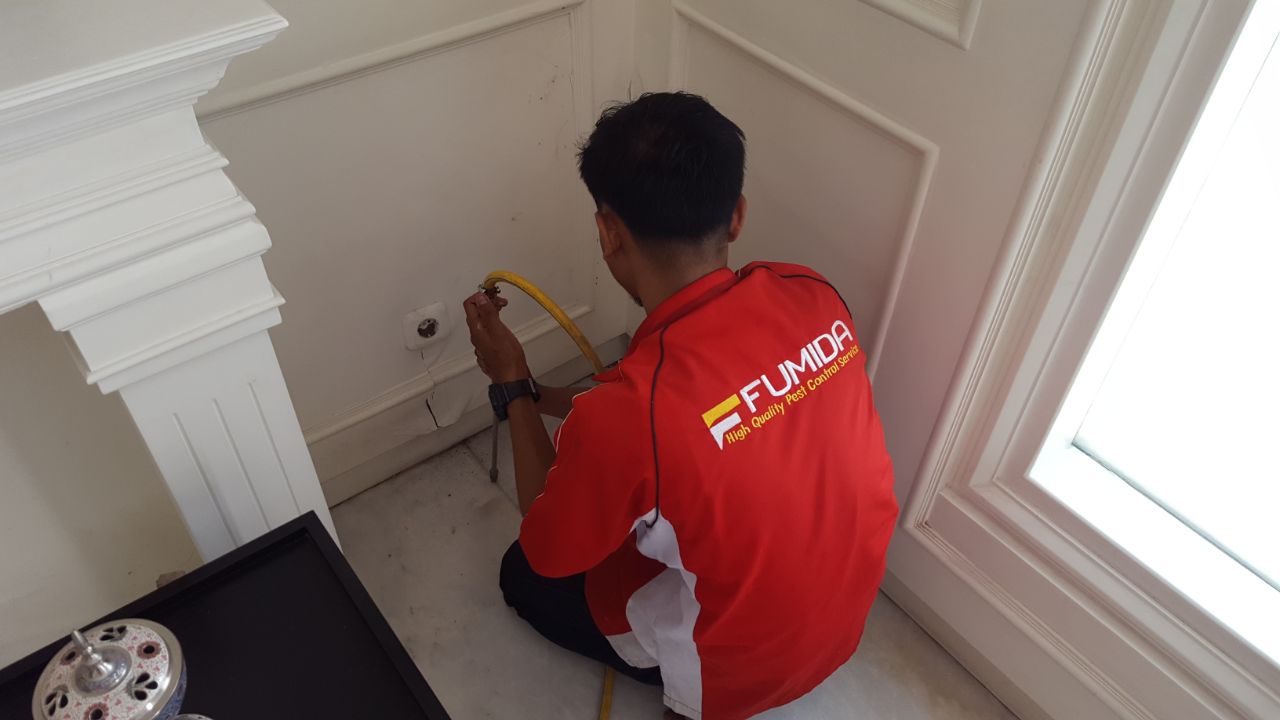
Fumigation Options In Indonesian Villas And Jakarta
Indonesian homeowners are taught to believe that tent-fumigation is the only option when ants from subterranean infiltrate walls, roofs and embedded wood. This notion is propagated by fumigation businesses and maintained by homeowner fear. The tent falls. The neighborhood complains. Families evacuate for 3 days. And the colony in the walls is killed. The colony which was in the garden and was not affected by the gas, rebuilt the foraging tunnels and then entered the building after 18 months. Fumigation sterilizes buildings but does not affect the landscape reservoirs. The idea of offering alternatives to the Jakarta anti-termite service that serves the villa market is not an act of charity, but an opportunity to position their business in a highly competitive market. Clients with large estates like those located in Pondok Indah that have eight bedrooms, or a holiday complex in Puncak, do not like tenting. They would like to eliminate the colony without the spectacle, evacuation, and the certainty of re-infestation.
1. Baiting and Fumigation both kill the colony.
Tent fumigation is a method of administering lethal gas into all void spaces in the envelope of the building. The entire termite colony in the building is destroyed. The colony under the driveway, the garden or the neighboring property is not affected. Trophallaxis is the method by the toxicant is delivered through baiting the colony's nucleus. The colony is killed. The structure becomes reinfestation-resistant because the source population is eliminated. The majority of homeowners who are aware of this distinction will rarely decide to apply fumigation more than once.
2. Heating Treatment penetrates where Gas Cannot
The whole-structure heat treatment boosts the internal temperature of wood to 50 degrees Celsius and maintains it for one hour. This kills all life forms including eggs, requires no tenting and leaves no chemical remnants. It is suitable for Indonesian villas that have intricate carvings and wood from the past, as well as exposed beam construction. The equipment is in place. Contractors exist. The only thing that prevents homeowners from adopting alternatives is their inadequacy.
3. Electro-Gun Technology - Localized Infections
The high-frequency microwave emits radiation that stimulate water molecules within the wood. This produces deadly heat, without harming other materials in certain infestation zones. If a property owner finds termites that are active in the door frame roof truss, roof truss, or any other wood structure, the electro-gun can eliminate the infestation without having to evacuate their home. Jakarta exterminators do not import this method of treatment because it's not an experimental.
4. Wood Injection Systems Preserve Architectural Fabric
The borate liquid formulations which are injected into drill holes at a pressure, move through the wood by capillary action, making the entire substance intoxic to termites for many years. The holes in the nail are deeper than the drill holes. The carvings are not damaged. The door frame has not been removed. Indonesian villa residents often refuse this treatment as exterminators suggest that they do it after having already suggested replacement. In the event of replacement, the offer are accepted.
5. Above-Ground Baiting to Hidden Cavity Colonies
The most common method of fumigation that is used when Coptotermes Gestroi creates an aerial nest in a roof cavity or wall void is tent fumigation. Bait stations elevated above the ground and secured to active mud tubes emerging at the edges of the ceiling or baseboards release toxicants directly to the nest's inhabitants. When construction workers exit the tubes that have been baited, they are consumed by their own nest. No tent. No evacuation. Six to eight weeks.
6. Nitrogen Freezing for Small-Scale Heritage Components
By circulating liquid nitrogen through sealed chambers around wood that is infested, termites within the wood are rapidly removed. The cycle of freezing is followed by a freeze and repeated. This is cryogenic poisoning and is not a chemical process. Nitrogen freezing can keep the patina of high-end museum Javanese carvings or furniture. Heat treatment and injection could darken it.
7. Physical Barrier Retrofits Help Prevent Reinfestation
The villa which fumigates each year, with no physical barriers, rents temporary sterilization. The perimeter excavation of stainless steel mesh and polymer sheet prevents termites below ground from entering a structure. When paired with a permanent exclusion device, fumigation options could be extremely persuasive. Sell this combination: baiting eliminates the colony, after that, you can construct the fence. This will make sure that the colony will be the last one to occupy the structure.
8. Carbon Dioxide Purging for Enclosed Spaces
Carbon dioxide that is pressurized and introduced into the attic space that is sealed or crawl areas displaces oxygen to lethal concentration for termites confined within those voids. It is not necessary to cover the entire structure however, only a part of it. CO2 quickly dissipates and leaves no residues and poses no risk to the inhabitants, provided reentry protocols are adhered to. Indonesian homes with termite activity confined to roof structures are over-served by complete fumigation of the building.
9. Timelines for Baiting have to be disclosed upstream
The termites can be eliminated by fumigation in 72 hours. Baiting kills the colony within between six and eight weeks. Villa owners who have used tenting will not be able to accept baiting if the timeframe is announced following mobilization. If the timeframe was made public prior to signing the contract and was deemed to be reasonable to pay for the chance of avoiding evacuation. Jakarta antitermite services that conceal the baiting time period up to proposal is delivered are creating their own closing rate issues.
10. The Reservoir Colony Needs to Be Attenuated
At the very least, one colony per villa is located near the green space, a cemetery, or a lot that is not developed. Fumigation doesn't affect this colony. Injection heat treatment, baiting or injection will ignore this colony, unless deployed specifically over the entire perimeter of the structure. Another option for fumigation are landscape baiting grids, which specifically target colonies outside that would otherwise reinfest the house in the course of 18 months. Pest control companies that treat the structure but not the reservoir will only provide temporary relief.
Indonesian villa-owners do not wish to leave. They do not want tents set on their property. They don't want neighbors to inquire if their property has been infested. What they are looking for is the colony dead and the assurance that it will not return. Fumigation will attain the first goal with a high degree of reliability, but the second one is not so much. When used in conjunction with other protocols, and not as a substitute for other methods, the following methods can be deployed to achieve both goals: baiting thermal treatments, microwave technologies, wood injections, nitrogen freezing carbon dioxide purging physical barrier retrofits, etc. Jakarta anti-termite service providers who position themselves as alternative fumigation providers -- using multiple elimination methods, educating technicians on species-specific protocols and documenting the results of measures to prevent reinfestation- will capture the premium villa sector that is currently being held in contracting tents. The equipment is significant. The training investment is continuing. The demand is already very high. Villa owners are searching for "fumigation alternative Jakarta" each day. Which exterminators with evidence-based alternatives and credible credentials will appear in search results What will they choose to use? And which are likely to default to tents? View the top anti rayap jakarta for blog info including lemari anti rayap, anti rayap, rayap kayu, penyebab rayap, pengendalian hama, jasa pest control, harga anti rayap, pengendalian hama, jasa pengendalian hama, cara membasmi rayap di lemari kayu and more.
